
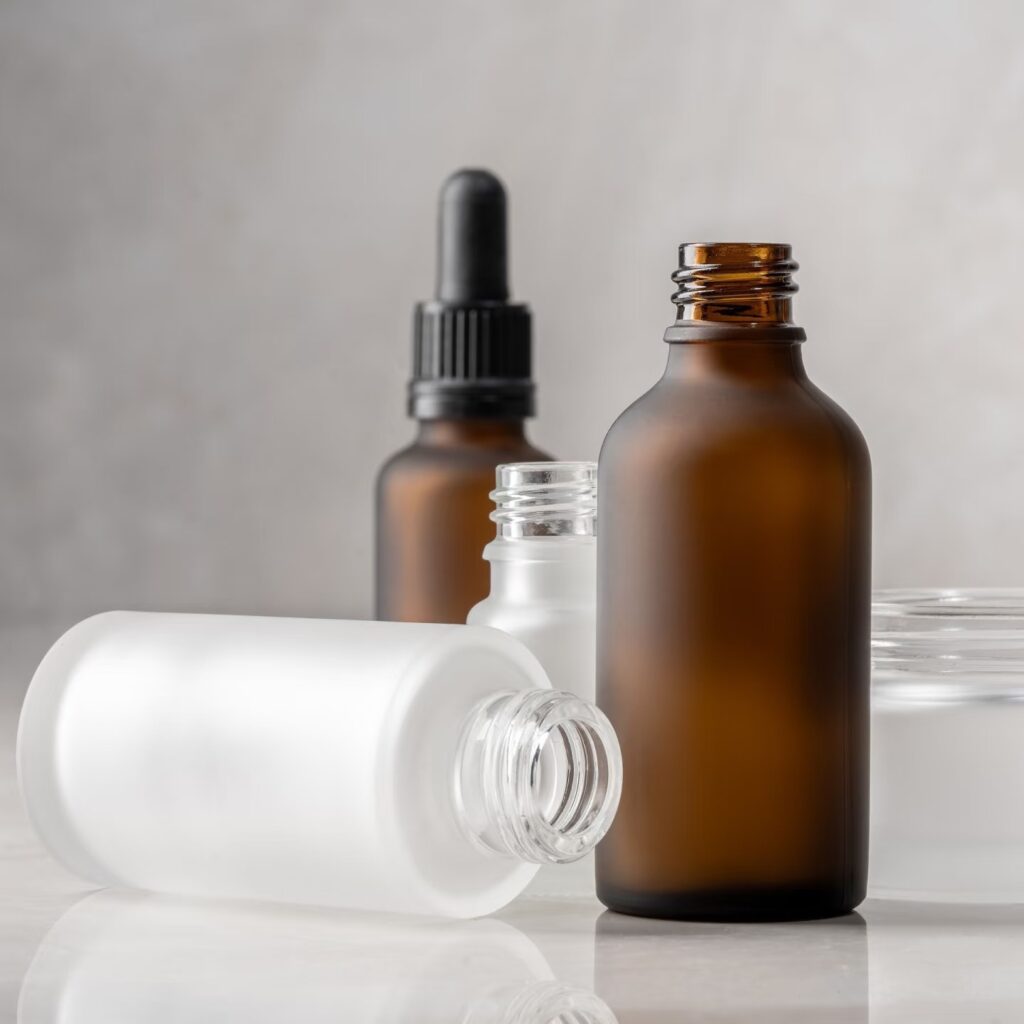
Ever wondered why two “matte” bottles can feel worlds apart? One feels like silk, while the other feels like sandpaper. The secret isn’t the color—it’s the process.
In the beauty industry, “matte” or “frosted” finishes are the go-to for conveying luxury and mystery. But here’s the reality: Choosing the wrong matte process can make a $100 serum look like a $5 bargain.
To protect your brand’s perceived value, you must understand the three mainstream techniques and how they impact your budget and the consumer’s tactile experience.
Why “Matte” Means Premium
The science of matte is Light Diffusion. By creating a micro-textured surface, light scatters instead of reflecting. This eliminates harsh glare and creates a soft, understated glow—the hallmark of sophisticated branding.
The Deep Dive: 3 Mainstream Matte Techniques
1. Acid Etching (Chemical Frosting) — The Gold Standard for Glass
- The Process: A chemical treatment (typically using hydrofluoric acid) that creates a permanent, microscopic corrosion on the glass surface.
- The Sensation:
- Touch: Exceptionally velvety and silky, with a jade-like warmth.
- Visual: Produces a soft, ethereal glow with perfectly even light transmission.
- Best For: Luxury perfume, high-end serums, and premium decanters.
- The Verdict: It is the most expensive and environmentally regulated option, but it offers an unmatched premium feel.
2. Sandblasting — The Versatile, Physical Alternative
- The Process: Compressed air propels fine abrasive media (glass beads or aluminum oxide) at high velocity onto the surface.
- The Sensation:
- Touch: A more pronounced granular texture; feels “raw” and organic.
- Visual: Highly controllable opacity, ranging from a light haze to a heavy frost.
- Best For: Hard plastics or glass where a specific, tactile “grip” or a more industrial/natural aesthetic is desired.
- The Verdict: Moderate cost with great flexibility, though less “silky” than acid etching.
3. Textured Molds — The High-Volume Plastic Hero
- The Process: The texture is engraved directly into the injection or blow mold. The plastic product emerges from the mold with the finish already integrated.
- The Sensation:
- Touch: Consistent and homogeneous; the texture is part of the material and impossible to wear off.
- Visual: Clean, uniform, and professional.
- Best For: High-volume plastic items like lotion bottles, cream jars, and caps.
- The Verdict: High upfront mold cost, but the lowest per-unit cost for mass production. It’s the most durable solution for plastics.
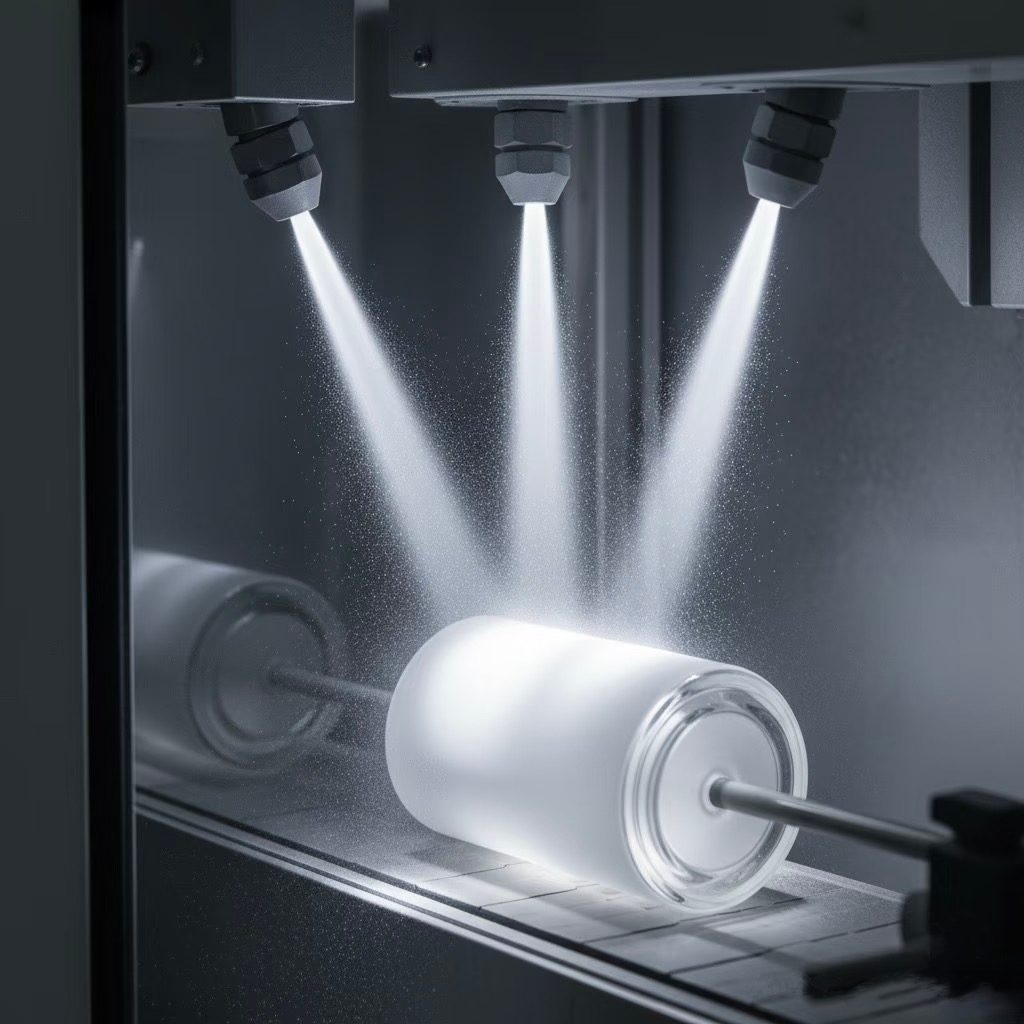
⚠️ The “Coating” Trap: Soft-Touch vs. Standard Matte
If your mold isn’t textured, you might use a surface spray. This is where most brands fail:
- Premium Choice (Soft-Touch): A specialized rubberized coating that feels supple, skin-like, and luxurious.
- Budget Risk (Standard Matte Paint): Often feels dry, chalky, and thin. It is prone to peeling and can instantly make your packaging look “cheap.”
Quick Comparison Table for Product Managers
| Feature | Acid Etching (Glass) | Sandblasting | Textured Mold (Plastic) |
| Tactile Feel | Silky, Jade-like | Granular, Tactile | Consistent, Solid |
| Durability | Permanent | High | Highest (Integrated) |
| Cost (Unit) | High | Moderate | Lowest (at scale) |
| Best Use | Luxury Skincare | Artisanal/Organic | Mass Market Premium |
Final Action Plan: Stop Settling for “Default”
The next time you talk to your supplier, don’t just ask for “matte.” Ask these two critical questions:
- “For this glass, is it a true chemical acid etching or a spray-on frost?”
- “For the plastic cap, are we using a textured mold or a soft-touch coating?”
Precise specifications are the only way to ensure your budget delivers the premium experience your brand deserves.